
Resource Center
Physical therapy practice resources
Guides, insights, and tools for independent PT clinic owners.

A Guide to Offering at Home Physical Therapy
Read our guide to offering at home physical therapy for your practice, for seamless and effective in-home PT

How to Audit Your Physical Therapy Practice Before Your First Year Ends
Audit your physical therapy practice before year one ends. Review finances, retention, referrals, and workflows to build a stronger plan for year two

How Practice Management Software Helps PT Clinics Create Consistent Operational Workflows
See how practice management software helps PT clinics build consistent workflows across scheduling, charting, billing, and messaging as they grow.

How to Build Efficient Routes for a Mobile Physical Therapy Practice
Learn how to build efficient routes for a mobile PT practice by defining service areas, grouping visits, and cutting drive time to see more patients.

How to Start a Mobile Physical Therapy Practice: A Step-By-Step Business Guide
Learn how to start a mobile physical therapy practice, from choosing a service area to setting up licensing, insurance, and everyday systems.

How to Choose the Best PT Documentation Software for Your Practice
Learn how to compare and choose the best physical therapy documentation software, what features matter?

What Are the Operational Warning Signs That a PT Clinic is Outgrowing Its Current Systems?
Learn the operational warning signs that your PT clinic has outgrown its current systems and how practice management software supports sustainable growth.

Why Documentation Software Is Not The Same as a PT Clinic Management System
Learn why documentation software and a PT clinic management system are not the same, and how integrated systems support scheduling, billing, communication, and clinic growth.

How To Know If a Physical Therapy Clinic Location Will Actually Generate Patients
Learn how to choose a physical therapy clinic location by evaluating demand, referrals, accessibility, and long-term growth before signing a lease.

How To Build a Physical Therapy Side Practice While Working Full-Time
Learn how to build a PT side practice while working full-time with practical strategies for scheduling, marketing, patient growth, and long-term success.

The Biggest Operational Mistakes New PT Clinics Make Before Hiring Their First Employee
Learn how operational readiness helps PT clinics grow sustainably by improving workflows, delegation, documentation, and team expansion.

Why Startup PT Clinics Need Online Practice Management Software to Stay Organized
Learn how online practice management software helps startup PT clinics stay organized, improve scheduling, and support sustainable growth.

The Biggest Misconceptions PT Clinics Have About AI Software
Explore common misconceptions about AI physical therapy software, from documentation concerns to compliance, workflow, and patient care.

Why Independent PT Clinics Struggle with Disconnected Software Systems as They Grow
Learn why disconnected software systems create operational bottlenecks for growing PT clinics and what to look for in an integrated platform.

Why AI is the New Standard in Physical Therapy Software & What Clinics Risk Without It
Learn why AI physical therapy software is necessary for PT clinics, and how AI tools can save clinicians time and money while improving quality of care.

How PT Clinics Use AI Scribes, Chatbots, & Automation to Save Time & Grow Their Practices
Learn about how PT clinics use AI scribes and automated workflows to save time and money while growing their practice.

When Should You Quit Your Job to Start a Physical Therapy Practice? A Risk-Based Approach
Learn how to use a risk-based approach to figure out the best time to start your own PT practice. See how PtEverywhere’s practice management software can help.

What Physical Therapists Get Wrong About Marketing a New PT Clinic in the First 6 Months
New PT clinic owners often make critical marketing mistakes including selecting the wrong channels and inconsistent communication. Establishing proper systems and prioritizing patient experience early creates a foundation for sustainable growth.

Mobile vs Home-Based vs Renting Clinic Space: Which Physical Therapy Practice Model is Right for You?
The right PT practice model depends on your schedule and lifestyle, with each option—mobile, home-based, or rented space—offering distinct trade-offs.
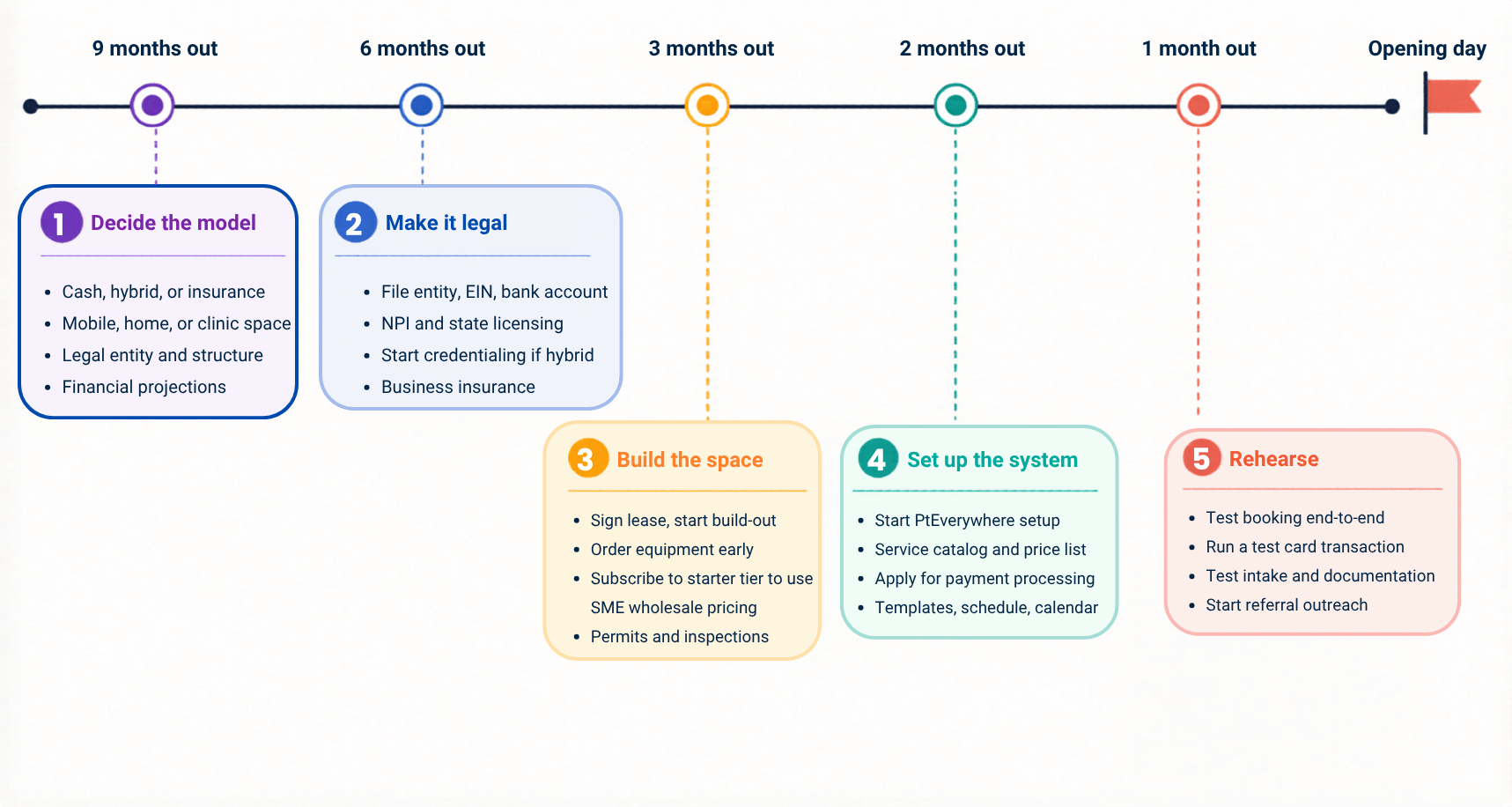
How Long Does It Take to Open a PT Clinic? A Realistic Startup Timeline
Opening a physical therapy clinic requires 4-6 months for cash-pay models, or 9-12 months if accepting insurance, with credentialing being the longest phase.

How to Register a Physical Therapy Business: Legal Steps for Starting a PT Clinic
This guide outlines the essential legal steps for registering a physical therapy business, including selecting an appropriate business structure, completing state and federal registrations, and ensuring healthcare compliance requirements are met from the outset.

How Small PT Clinics Can Get Equipment at Big Clinic Wholesale Prices
Small physical therapy clinics typically pay more for equipment due to limited buying power, but integrated purchasing tools and vendor partnerships can help independent practices access wholesale pricing and purchasing expertise previously available only to larger organizations.

Physical Therapy Pricing Packages and Memberships: Alternative Pricing Models for PT Clinics
Physical therapy clinics are transitioning from per-session pricing to structured models like packages and memberships that improve patient outcomes and stabilize revenue. These alternative approaches prioritize consistency and long-term care planning.

PtEverywhere Announces Integrated Purchasing Agreement with Superior Medical Equipment (SME)
PtEverywhere has partnered with Superior Medical Equipment to provide independent physical therapy clinics with big-clinic wholesale pricing and streamlined access to over 350,000 PT-specific products through single sign-on integration.

Hybrid vs Cash-Based Physical Therapy Practice: Which Model is Right for Your PT Business?
Explores the differences between cash-based and hybrid PT practice models, examining revenue structures, pricing strategies, compliance requirements, and long-term sustainability to help clinic owners select the approach that fits their business goals.

How to Start a Physical Therapy Practice in 2026: A Step-By-Step Guide For New PT Entrepreneurs
New PT entrepreneurs should focus on three core elements: proper business formation, operational systems before launch, and early cash flow protection. Choosing reliable practice management software provides a foundation for sustainable growth.

How to Choose the Best PT EMR Software for a Growing Physical Therapy Clinic in 2026
Selecting PT EMR software requires evaluating workflow fit and integration capabilities beyond feature lists. The right platform should streamline documentation, billing, and scheduling while supporting clinic growth.

EMR vs EHR For Physical Therapy: What is the Difference and Which Does Your PT Clinic Need?
EMRs and EHRs differ in scope—EMRs serve single practices while EHRs enable cross-organization data sharing. For PT clinics, selecting a system purpose-built for PT workflows matters more than terminology distinctions.

How to Become a PT Influencer Without Losing Your Clinical Credibility
Physical therapists can build credible online influence by sharing educational, evidence-informed content that aligns with their clinical practice, prioritizing professional boundaries over trends.

How to Price Physical Therapy Services for a Sustainable 1:1 PT Practice
To establish sustainable pricing for a 1:1 PT practice, clinicians must account for individualized care delivery and true operating costs rather than simply matching competitor rates.

How a Physical Therapy Network Helps PT Entrepreneurs Succeed and Grow Their Clinics
Running a successful physical therapy practice benefits from dedicated community support offering guidance on growth, staffing, marketing, and management. Connecting with peers designed for independent PT owners creates space to ask questions and build sustainable practice models.

Why You Need a PT EMR Built Specifically for Physical Therapy Clinics
A PT EMR designed for physical therapy clinics supports documentation, compliance, billing, and workflows differently than general EMR systems, helping clinics establish strong operational foundations from the start.

Physical Therapy EMR Software: 3 Necessary Features to Consider
Physical therapy EMR software helps clinics centralize documentation and patient records in a secure system. This article examines three essential features—AI voice notes, mobile charts, and custom templates—that modern PT clinics should prioritize.

What PTs Should Evaluate Before Launching HEP Software in Their Clinic
PT clinics launching digital HEP software should carefully evaluate key factors including content quality, patient engagement tools, and system integration to avoid fragmented workflows and poor adoption.

The Importance of Audit Trails in Modern Physical Therapy Billing Software
Audit trails in PT billing software maintain chronological, time-stamped records of all billing actions, supporting transparency, compliance, and accurate reimbursement while building patient trust.

How to Build a Waitlist Strategy Using Physical Therapy Scheduling Software
Physical therapy scheduling software with built-in waitlist tools helps PT clinics fill cancellation slots automatically, reduce revenue loss, and keep patients engaged during periods of high demand.

PtEverywhere Launches Customer Community to Support PT Practices and Drive Product Innovation
PtEverywhere announced the launch of an online community for physical therapy practices to suggest new functionality, ask questions, and exchange best practices while influencing product development and gaining peer support.

Chart in Seconds: How AI Voice Notes Streamline Physical Therapy EMRs
AI voice notes in physical therapy EMRs reduce documentation time by transcribing speech into structured clinical notes in real time, improving accuracy and giving therapists more time for patient care.

Physical Therapy Marketing Made Easy with Broadcasts and Drip Campaigns
Broadcast messages and drip campaigns help PT clinics stay connected with patients through automated, targeted communication that supports retention, referrals, and consistent appointment volume.

Choosing the Right Physical Therapy Telehealth Software: 3 Features You Can't Skip
Physical therapy telehealth software should include HIPAA-compliant video, integrated scheduling, and seamless EMR documentation to deliver remote care effectively without adding administrative complexity.

How HIPAA-Secure Messaging Keeps Physical Therapy Patients Engaged and On Schedule
HIPAA-secure messaging in physical therapy software supports patient engagement by enabling real-time, compliant two-way communication that reinforces adherence, answers questions, and reduces no-shows.

How Mobile PT Practice Management Software Keeps Your Clinic Moving
Mobile PT practice management software lets therapists document, schedule, and communicate from any device, reducing desktop dependency and keeping clinical workflows running smoothly throughout the day.

5 Mistakes to Avoid When Choosing PT Practice Management Software
Choosing PT practice management software without evaluating workflow fit, integration depth, and scalability leads to costly transitions and operational friction that independent clinics can avoid with the right selection process.

Automated Appointment Reminders: A Must-Have for Busy PT Clinics
Automated appointment reminders reduce no-shows in physical therapy clinics by delivering timely, personalized notifications through text and email, supporting schedule consistency without adding administrative burden.

What is a Home Exercise Program Software for Physical Therapy Practices?
Home Exercise Program software allows physical therapists to create customized exercise plans with video demonstrations and automated reminders, improving patient adherence and recovery outcomes.

PtEverywhere Launches GoHighLevel Integration to Power Automated Patient Engagement and Marketing Workflows
PtEverywhere announced a new GoHighLevel integration enabling physical therapy clinics to automate patient engagement and marketing campaigns, synchronizing patient data, appointments, and case milestones in real time to eliminate duplicate entry and streamline communications.

Tired of Physical Therapy Coding Headaches? PtEverywhere Simplifies It
Physical therapy coding errors lead to claim denials and delayed reimbursement. PtEverywhere simplifies PT coding by connecting documentation directly to billing workflows, reducing manual entry and improving claim accuracy.
24/7 Online Booking: How PT Scheduling Software Can Handle Your Scheduling For You
How 24/7 online booking through PT scheduling software reduces no-shows, automates admin work, and helps independent clinics compete with larger practices by keeping their calendars full around the clock.

How Physical Therapy Patient Portals Improve Communication and Retention
Physical therapy patient portals give patients 24/7 access to their records, home exercise programs, and secure messaging, improving communication, engagement, and long-term retention for PT clinics.

Physical Therapy Billing: In-House, Outsourced, or Software? Pros and Cons
Physical therapy clinics can handle billing in-house, outsource to a billing service, or use integrated billing software. Each approach has trade-offs across cost, control, and administrative workload that clinic owners should understand before deciding.

Top 8 Features Every Physical Therapy Management Software Should Have
The best physical therapy management software combines scheduling, EMR documentation, billing, HEP tools, and patient communication in a unified platform with mobile access, outcome tracking, and HIPAA-compliant security.

5 Ways to Improve Physical Therapy Billing Efficiency in Independent Clinics
Independent PT clinics can improve billing efficiency by connecting documentation to billing workflows, reducing claim errors, automating repetitive tasks, and monitoring revenue cycle performance with real-time reporting.

Reducing No-Show Appointments: Best Practices for PT Offices
Physical therapy no-shows reduce revenue, disrupt schedules, and delay patient outcomes. Combining automated reminders, waitlist management, and patient engagement tools significantly reduces no-show rates in PT clinics.

PtEverywhere Strengthens Leadership with A Strategic Growth Investment
PtEverywhere announced a strategic growth investment from Shofner Capital Partners and appointed Andrew Shofner as CEO to guide expansion, leadership team growth, and product innovation for cash-pay physical therapy clinics.

EMR vs Paper Medical Records for Your Physical Therapy Practice
Explore the key differences between EMR and paper medical records, and discover why transitioning to an electronic system benefits your practice, improves patient care, and saves time.

7 Physical Therapy Scheduling Mistakes That Cost Clinics Thousands
Learn about seven common scheduling pitfalls in physical therapy clinics and how PtEverywhere's scheduling software helps avoid costly errors that impact revenue and patient care.

EMR for Outpatient PT: What to Look For and What to Avoid
The right EMR can simplify documentation, reduce administrative headaches, and directly improve patient outcomes and clinic revenue for outpatient PT practices.

Can Telehealth Physical Therapy Grow Your Practice in 2025?
Explore how telehealth physical therapy can expand patient access, improve retention, and unlock new revenue streams for PT clinics in 2025.

Starting a Cash-Based PT Practice: Your Helpful Guide
A comprehensive roadmap for physical therapists transitioning to cash-based models, covering market evaluation, pricing strategies, legal compliance, and essential operational tools.

Why Cash-Based Physical Therapy Practices Need Purpose-Built Software
Generic PT software designed for insurance-based practices fails cash-based clinics. Purpose-built solutions like PtEverywhere address unique needs including package pricing, membership management, and streamlined billing workflows.

Why PtEverywhere Is the Ideal Solution for Your Independent Physical Therapy Practice
PtEverywhere is an all-in-one platform purpose-built for independent physical therapy practices, offering streamlined workflows, improved patient experiences, and features designed to enhance operational efficiency and revenue growth.

Billing Compliance Strategies for Hybrid PT Clinics
Guide covering billing, compliance, and growth strategies for hybrid physical therapy practices combining in-person and telehealth services.
Upgrade to All-in-One Management Software for Your PT Clinic
Learn why physical therapy clinics need comprehensive all-in-one management software to save time, elevate patient care, and increase revenue through integrated scheduling, billing, EMR, and patient engagement tools.

Patient Enrollment in Physical Therapy: How to Optimize It
Patient enrollment is a critical first step that sets the tone for patient-provider relationships while impacting workflow efficiency, insurance compliance, and satisfaction.

How to Use 97110 CPT Code in Your Physical Therapy Clinic
CPT code 97110 is essential for billing therapeutic exercises in physical therapy. This guide covers proper application, documentation requirements, and billing strategies to ensure compliance and optimize reimbursement.

How to Use Knee Pain ICD-10 Codes for Billing Practices
Knee pain is one of the most frequent musculoskeletal conditions physical therapists address, and effective treatment begins with precise documentation—including choosing the right ICD-10 code.

What Is an NPI Number? Complete Guide for PT Professionals
Everything physical therapists need to know about NPI numbers—what they are, how to apply, how to use both individual and group NPIs, and how to stay compliant.

The Complete Guide to Muscle Testing for Physical Therapists
Muscle testing is a foundational skill in physical therapy, providing essential insights into a patient's neuromuscular status. This guide covers manual evaluation techniques, grading systems, and how software can streamline documentation.

Guide to Ultrasound CPT Codes in Physical Therapy
Physical therapy professionals increasingly use diagnostic ultrasound to enhance patient care, requiring understanding of billing and documentation. This guide helps providers navigate ultrasound CPT coding, insurance requirements, and workflow optimization.

Is Telehealth Covered by Insurance?
A breakdown of telehealth insurance coverage for physical therapists—Medicare timelines, Medicaid state variability, private payer rules, and how to get reimbursed.

Excludes 1 in ICD-10: Full Guide for PTs
A complete guide to Excludes 1 notes in ICD-10—what they mean, how they differ from Excludes 2, real-life PT scenarios, and how to stay compliant and avoid claim denials.

What is PQRS? A Game Changer for Physical Therapy
The Physician Quality Reporting System (PQRS) was a CMS initiative launched in 2006 to improve healthcare quality. Although PQRS has evolved into MIPS, understanding its foundational principles remains essential for physical therapy practices navigating modern compliance requirements.

Understanding Participating and Non Participating Providers
A clear breakdown of participating vs. non-participating vs. opt-out Medicare providers—what each status means for PT billing, reimbursement, and patient relationships.

Medicare Provider Enrollment: A Step-by-Step Guide
A step-by-step walkthrough of the Medicare provider enrollment process for physical therapists—from getting your NPI to using PECOS and staying compliant long term.

What Is Patient Relationship Management and Why It Matters
Patient relationship management enables physical therapy clinics to optimize communication, engagement, and retention. When implemented effectively through dedicated software, PRM leads to better clinical outcomes and stronger business growth.

What Physical Therapists Need to Know About CPT Code 31575
CPT code 31575 refers to diagnostic flexible fiberoptic laryngoscopy used to examine the larynx and assess abnormalities affecting speech and swallowing. Physical therapy professionals should understand this code when working with speech-language pathologists to ensure accurate billing and compliance.

Nursing Home vs Skilled Nursing Facility - Explained
A breakdown of the key differences between nursing homes, skilled nursing facilities, and assisted living—and what they mean for physical therapy professionals.

What Are Skilled Nursing Facilities and How They Support Patients
An overview of skilled nursing facilities, the role of physical therapy within them, and how payment models like PDPM affect therapy services.

How to Use Section GG for Accurate Documentation and Scoring
Section GG is a standardized CMS assessment tool that evaluates patient self-care and mobility abilities, directly influencing reimbursement rates and quality metrics in post-acute care settings.

How Long Is PT School and What Does It Involve?
Becoming a licensed physical therapist is a rewarding yet rigorous journey requiring six to seven years of education, including undergraduate studies, a Doctor of Physical Therapy program, clinical rotations, and licensure.

Understanding APTA CSM 2025 and Using It for Your Practice
The APTA Combined Sections Meeting 2025 concluded on February 13, offering physical therapy professionals valuable insights on contract negotiation, patient marketing, burnout reduction, hybrid care, and preparing for value-based care.

What Does USAW-L1 Stand for in Physical Therapy?
USAW-L1 certification, standing for USA Weightlifting Level 1 Sports Performance Coach, is gaining recognition among physical therapists for enhancing rehabilitation and strength-based treatment strategies with Olympic weightlifting principles.

ICD 10 Code for Hypertension in Physical Therapy
Hypertension is a prevalent condition requiring proper ICD-10 coding for physical therapists. This guide explores the essential codes, documentation requirements, and billing strategies for managing hypertensive patients in PT settings.

Physical Therapy Social Media Ideas 2025: Grow Your Practice
Explore practical physical therapy social media strategies, from transformation stories to live Q&A sessions, designed to help clinics engage patients and build online communities in 2025.

G-Codes in 2025: What Physical Therapists Need to Know
G-codes were phased out of Medicare requirements in 2019—here's what physical therapists need to know about their status in 2025 and what to use instead.

Activities of Daily Living: A Guide for PT Professionals
Activities of daily living encompass the core tasks that individuals perform on a regular basis to maintain health, autonomy, and overall well-being. Understanding ADLs and addressing them in treatment significantly impacts patient outcomes and clinic success.

How to Code Left Shoulder Pain With ICD 10 in Physical Therapy
Shoulder pain is a common complaint among patients visiting physical therapy clinics. Understanding the ICD-10 code M25.512 for left shoulder pain documentation is essential for accurate billing and treatment planning.

Functional Limitations: A Comprehensive Guide
Functional limitations refer to restrictions in an individual's ability to perform essential activities of daily living due to physical, cognitive, or psychological impairments. This guide explores their practical applications in physical therapy.

Understanding the Medicare Physical Therapy Cap for 2025
A complete guide to the Medicare physical therapy cap—how the annual therapy threshold works, KX and GA modifiers, targeted review, and compliance tips for PT practices.

Medically Oriented Gyms (MOGs): Everything You Need to Know
A complete guide to medically oriented gyms—what they are, why they're transforming physical therapy practices, and how to successfully implement one in your clinic.

Low Back Pain ICD 10 Coding Guide for Physical Therapy
Low back pain is one of the most common complaints seen in physical therapy clinics. Understanding ICD-10 coding for conditions like M54.50 ensures accurate diagnosis, treatment planning, and proper insurance reimbursement.

Activities of Daily Living (ADLs) in Physical Therapy
ADLs are fundamental to assessing patient functionality, planning effective interventions, and ultimately enhancing patient independence and quality of life. This comprehensive guide explores ADL assessment methods and strategies for supporting improved daily living performance.

Physical Therapy SEO: A Comprehensive Guide
Master Search Engine Optimization to attract more potential patients, stand out from competition, and grow your physical therapy practice effectively.

How to Bill for Unsteady Gait Using ICD-10 Code
Accurate ICD-10 coding is essential for effective patient care and seamless billing processes. This article provides guidance on coding unsteady gait and related gait disturbances for physical therapy billing.

Ready for Open Enrollment? Join Inovalon's Webinar on Mastering Reimbursements
This webinar explores strategies for managing patient insurance changes during open enrollment season, focusing on maintaining revenue cycles and avoiding reimbursement delays.

What Is RCM? Guide to Revenue Cycle Management in PT
Revenue Cycle Management (RCM) is essential for healthcare operations, serving as the backbone of financial stability for physical therapy clinics of all sizes.

How to Use Sciatica ICD 10 Code in Physical Therapy Billing
A guide for physical therapists on properly using ICD-10 codes for sciatica documentation, billing, and patient care management, including code selection strategies and practice optimization.

AI in Physical Therapy: Everything You Need to Know
A comprehensive guide to how artificial intelligence is transforming physical therapy—from injury prediction and documentation to remote monitoring and the future of rehab.

Physical Therapy Billing Units: Maximizing Reimbursement
Master physical therapy billing units and optimize reimbursement. Learn CPT codes, the 8-minute rule, documentation best practices, and strategies to streamline your revenue cycle.

Top 11 Physical Therapy Month Ideas for Your Clinic
Eleven impactful ideas for National Physical Therapy Month—from celebrating patient success stories to community screenings and wellness challenges—that work all year long.
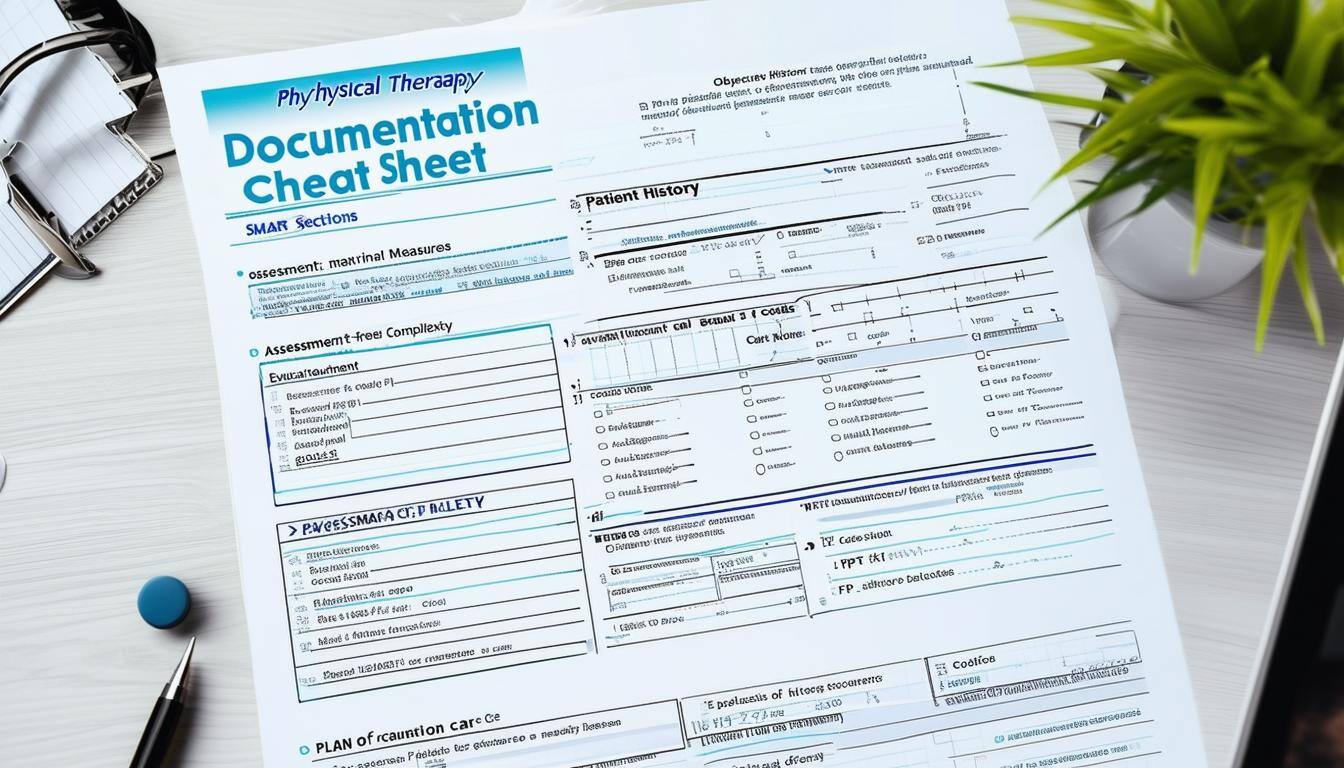
PT Documentation Cheat Sheet: Keeping Your Practice on Track
Effective documentation is at the core of successful physical therapy practices. A documentation cheat sheet helps therapists structure their work efficiently while ensuring regulatory compliance and proper reimbursement.

Bring Your Physical Therapy Intake Forms to the 21st Century
Digital intake forms streamline patient onboarding by eliminating paper-based processes, reducing administrative burden, and improving data accuracy while enhancing the overall patient experience.

CPT Code 97535: Key Information for Physical Therapists
CPT code 97535 covers self-care and home management training for patients, helping them perform activities of daily living and compensate for functional limitations. Accurate documentation and understanding billing requirements are essential for proper reimbursement.

Top Hacks of Physical Therapy Practice Management Consultants
This guide explores strategies from physical therapy practice management consultants to help clinic owners streamline operations, maximize administrative time, and improve overall clinic performance through practical implementation of structured routines and staff empowerment.

CMS Proposed Rule 2025: Everything PTs Need to Know
The CMS proposed rule for 2025 introduces significant updates to telehealth services, supervision requirements, and billing codes that will impact physical therapy practices, including payment rate reductions, extended telehealth flexibilities, and new CPT codes for caregiver training.

Understanding ICD 10 Codes for Impaired Mobility and Gait
A comprehensive guide to ICD-10 codes for impaired mobility, fall risk, and gait abnormalities—covering when to use each code and how to avoid common billing pitfalls.

Definitive Guide to Mastering Physical Therapy Billing
Comprehensive guide empowering physical therapists and practice managers with essential knowledge to master billing processes, ensure timely reimbursements, and maintain financial health.

What Is Value-Based Care? A Comprehensive Guide
A comprehensive look at value-based care in physical therapy—what it means, how to implement it, and how to use data and technology to thrive in this model.

Ultimate Guide to Success in Private Practice Physical Therapy
A comprehensive guide covering research, planning, business structure, clinic setup, staffing, marketing, and technology solutions for launching and growing a successful private physical therapy practice.
Understanding The Quality Payment Program (QPP) for PT Practices
The CMS Quality Payment Program represents a fundamental shift from volume- to value-based reimbursement. Here's what physical therapists need to know to stay compliant and earn bonuses.
Embracing Healthcare Consumerism in the PT Industry
How the shift toward healthcare consumerism is reshaping physical therapy—and what PT practices can do to meet the expectations of empowered, informed patients.
Top Physical Therapy Scheduling Software for Efficient Booking
A comprehensive guide to physical therapy scheduling software, covering key features, top solutions for 2024, and future trends transforming how PT practices manage appointments.
Cash Based Physical Therapy: A Practice Owner's Guide
A comprehensive guide to starting and running a cash-based physical therapy practice, covering market evaluation, financial planning, marketing strategy, and operational essentials.

Optimize with Physical Therapy Documentation Software
Physical therapy documentation software streamlines patient record management and improves clinic efficiency. This specialized tool helps practitioners document care accurately while reducing administrative burdens and enhancing overall treatment outcomes.

Guide to Patient Marketing in the Physical Therapy Industry
A comprehensive guide to patient marketing strategies for physical therapy clinics, covering direct-to-patient marketing, patient engagement, and methods to increase patient volume.

A Look at the Best Payer Mix for a Physical Therapy Clinic
Understanding and optimizing payer mix—the proportion of revenue from different insurance types—is critical for physical therapy practice financial success and stability.

Transform Your Practice with Physical Therapy EMR Software
Physical Therapy EMR Software revolutionizes practice management by centralizing documentation, scheduling, billing, and communication to save time, elevate patient care, and increase revenue.

Analyzing and Streamlining Physical Therapy Treatment Plans
This article explores how physical therapists can develop effective treatment plans by understanding assessment processes, setting SMART goals, and leveraging technology to streamline workflows and improve patient outcomes.

Boost Revenue with Advanced Physical Therapy Billing Software
Advanced billing software optimizes revenue and streamlines operations in PT clinics through automation, accuracy, compliance, and efficient payment collection processes.

SPM Billing Essentials Every Physical Therapy Clinic Should Know
Substantial Portion Methodology (SPM) is a key billing technique that differs from the Medicare 8-minute rule and can significantly increase revenue — if implemented correctly.

Mastering the Billing Workflow for Physical Therapy Practices
Managing an efficient billing workflow is crucial for financial stability. This guide explores components of effective medical billing, processes involved, and software solutions for streamlined systems.

Video: 4 Benefits of an Integrated Approach in Your PT Practice
An integrated approach to physical therapy practice management connects scheduling, documentation, billing, and patient engagement in one unified platform, reducing administrative burden and improving outcomes.

What PT Practices Learned from the Change Healthcare Hack
The Change Healthcare ransomware attack in February 2024 disrupted claims processing for physical therapy practices, highlighting critical lessons about cybersecurity that rehab therapy professionals must implement to protect their businesses.

Medicare Assignment: What Physical Therapists Need to Know
A clear guide to Medicare assignment for physical therapists—what it means to participate or not, the pros and cons of each status, and practical tips for making the right choice for your practice.

Infographic: Key Features of Top Physical Therapy Software
An infographic showcasing the key features of top physical therapy software solutions, highlighting how to save time, elevate patient care, and increase revenue.

Transforming PT Practices: PtEverywhere Real-World Success Stories
Discover how PtEverywhere transforms physical therapy practices through streamlined operations, enhanced patient care via technology, and real-world success stories demonstrating improved efficiency and business growth.

How to Use Modifier 59 Correctly In Physical Therapy Billing
A guide explaining when and how to correctly apply Modifier 59 in physical therapy billing, covering its definition, proper usage, recent CMS changes, and practical examples.

Home Health PT: Does Medicare Cover Physical Therapy at Home?
A clear breakdown of Medicare home health care coverage for physical therapy—eligibility conditions, what's covered, cost implications, and how to document compliantly.

Integrated Physical Therapy Solutions: The Ultimate Guide for 2024
A comprehensive guide to integrated physical therapy solutions covering patient care strategies, practice management software, and the future of PT technology.

TPE Audits: A Comprehensive Guide for Physical Therapists
Everything physical therapists need to know about Targeted Probe and Educate (TPE) audits—how they work, who gets targeted, and how to prepare and respond effectively.

QCDR Landscape: Empowering Physical Therapists
Qualified Clinical Data Registries (QCDRs) offer physical therapists financial incentives, quality improvement insights, and peer collaboration — here's how to choose the right one.

Upcoding and Unbundling: Avoiding Illegal Billing Practices
A guide to understanding upcoding and unbundling in physical therapy billing—what they are, why they carry severe legal risks, and how to prevent them in your practice.

How PTs Can Avoid Overbilling, Misbilling, and Underbilling
A practical guide to the three billing blunders in physical therapy—overbilling, misbilling, and underbilling—including causes, consequences, and how to prevent each.

Understanding Claim Denials in Physical Therapy Practices
A comprehensive guide to understanding, preventing, and managing claim denials in physical therapy practices to protect your revenue cycle.

How to Submit a Claim to Medicare for Physical Therapists
A step-by-step guide to submitting Medicare claims for physical therapists—from enrollment and documentation to electronic submission and avoiding common claim errors.

Direct Access Physical Therapy: An Essential Guide for PTs
A comprehensive guide to direct access physical therapy covering state regulations, insurance nuances, and strategies for successfully implementing a direct access model.

Medicare Referral Requirements: What PTs Need to Know
Understanding Medicare referral requirements is crucial for therapists and PT practice owners. This guide explores implications, challenges, and alternatives for physical therapy professionals navigating Medicare's referral landscape.

Medical Practice Marketing for Physical Therapists: 2024 Guide
A comprehensive guide to digital and traditional marketing strategies for physical therapy practices, from SEO and social media to referral programs and telehealth promotion.

Physician Marketing for PT Professionals: A Comprehensive Guide
A deep dive into physician marketing strategies for PT practices, covering networking, online reputation, referral marketing, and how to build lasting relationships with referring physicians.

ICD 10 vs CPT Codes: What Physical Therapists Should Know
A comprehensive comparison of CPT and ICD-10 codes for physical therapists—their distinct roles, key differences in format and usage, and practical tips for selecting the right codes every time.

Courtesy Billing in Physical Therapy: A Complete Guide
A step-by-step overview of courtesy billing in physical therapy—how it works, its benefits and challenges, and how technology can simplify the process for out-of-network practices.

MIPS for Physical Therapists: A Guide for 2024
A comprehensive guide to the Merit-Based Incentive Payment System (MIPS) for physical therapists, covering eligibility, scoring, payment cycles, and strategies to optimize your performance.

Occupational Therapy Abbreviations Cheat Sheet
A comprehensive guide to occupational therapy abbreviations for physical therapists and practice owners, covering common OT terms, assessment tools, intervention techniques, and medical conditions to enhance collaboration and patient care.

Physical Therapy Month: Celebrating Movement and Rehabilitation
How physical therapists and practice owners can make the most of National Physical Therapy Month in October through community engagement, team development, and practice investment.

A Guide to Physical Therapist Abbreviations
A comprehensive guide to understanding physical therapy abbreviations, covering their meanings, proper usage, and common pitfalls to enhance efficiency and clear communication in clinical practice.

Cryotherapy CPT Code: Differences Between 97010 vs. 97016
A practical breakdown of CPT codes 97010 and 97016 for cryotherapy—what each covers, how to choose the right code, and key reimbursement and documentation considerations.

How a Referring Physician Can Boost Your PT Clinics' Business
A complete guide to understanding, attracting, and building lasting relationships with referring physicians to drive consistent patient flow to your physical therapy clinic.
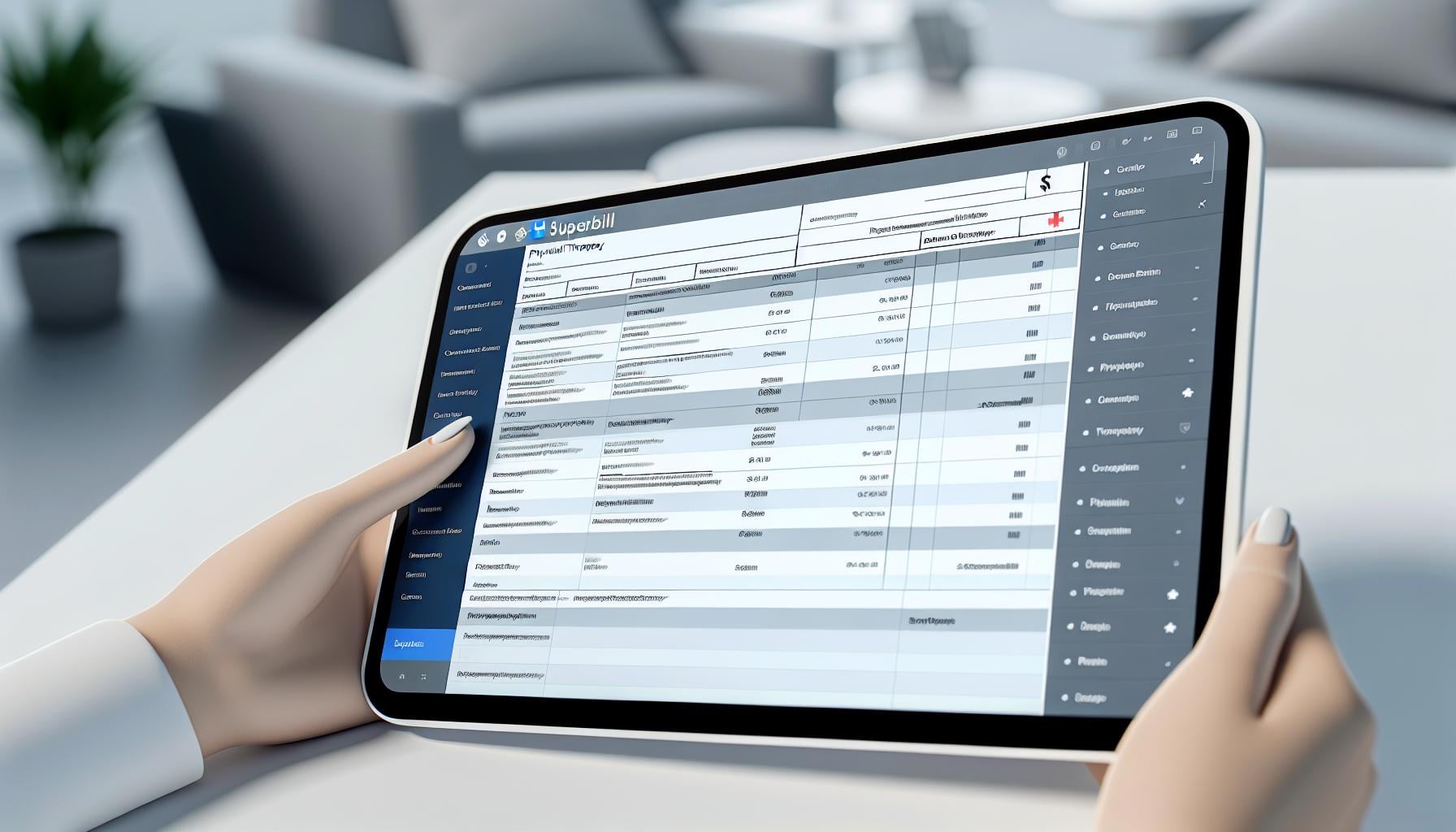
How Does a Superbill Work for Your Physical Therapy Practice
A complete guide to superbills for physical therapy practices—what they are, their essential components, medical coding requirements, compliance considerations, and how to automate the process.

Navigating ABN Forms: A Complete Guide for Private PT Practices
A comprehensive guide to Advance Beneficiary Notices (ABNs) for private physical therapy practices—when they're required, how to fill them out correctly, and best practices for patient communication.

Importance of HIPAA Compliant EMRs for Modern PT Businesses
Why HIPAA-compliant EMRs are essential for physical therapy practices—covering the seven security pillars, implementation strategies, and how the right software protects your patients and practice.

7 Ways to Get More Physical Therapy Referrals for Your Practice
Seven proven habits for building a referral-generating physical therapy practice, from cultivating physician relationships to leveraging patient advocacy groups.

Common HIPAA Violation Examples in Physical Therapy Practices
Real-world HIPAA violation examples for physical therapists, a practical compliance checklist, and key strategies for protecting patient privacy and avoiding costly penalties.

Neuromuscular Reeducation CPT Code 97112: A Complete Guide
A comprehensive guide to CPT code 97112 for neuromuscular reeducation—what it covers, who can use it, documentation requirements, billing guidelines, and best practices for physical therapists.
CPT Code 97140: Manual Therapy Billing for Physical Therapists
A detailed guide to CPT code 97140 for manual therapy—what it covers, billing and documentation requirements, compliance considerations, and how to distinguish it from related codes.

CPT Code 90853: Billing and Coding Overview for Group Therapy
A practical guide to CPT codes 90853 and 90849 for group therapy billing—definitions, key differences, coding modifiers, billing best practices, and how to navigate insurance reimbursement.

The Future of Physical Therapy: Exciting Prospects
How demographic shifts, technology, and specialization are shaping the future of physical therapy—and what PTs need to do to stay ahead.

Trigger Point Injection CPT Codes: A Billing Guide for PT Clinics
A detailed guide to CPT codes 20552 and 20553 for trigger point injections—when to use each code, how modifiers and units work, documentation requirements, and how to link ICD-10 codes correctly.
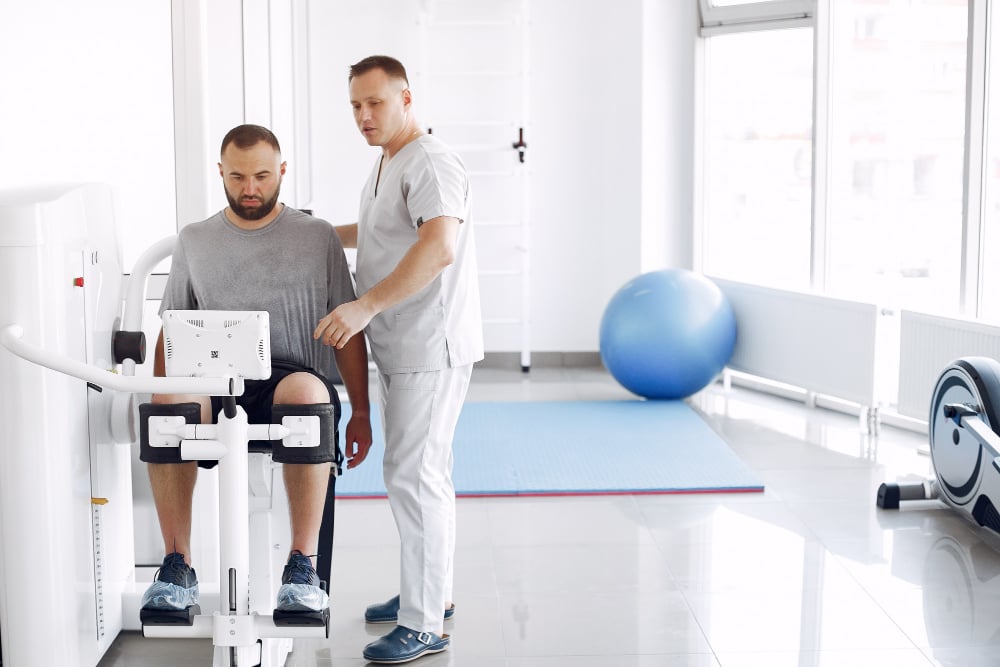
How Modern Physical Therapy is Revolutionizing Rehabilitation
From telehealth and data-driven decisions to cutting-edge techniques like BFR and dry needling, modern physical therapy has transformed what rehabilitation can achieve.

8 Ways Technology in Physical Therapy Is Revolutionizing Rehab
From telehealth and wearables to AI-powered rehabilitation and bioprinting, eight technologies transforming what physical therapy can deliver for patients and clinics.

Pro Tips and Tricks for Physical Therapy Documentation
Practical tips, documentation requirements, and technology solutions to help physical therapists create accurate, compliant, and efficient records every time.

Physical Therapy Aide vs. Assistant: What's the Difference?
This article clarifies the distinct roles of physical therapy aides and assistants, explaining their different responsibilities, education requirements, salary expectations, and career progression opportunities in clinical settings.

ADA Tax Credit for PT Clinics: A Guide to Accessibility
A practical guide to the ADA Disabled Access Credit for physical therapy clinics — covering eligibility, qualifying expenses, the step-by-step claim process, and how practice management software can simplify compliance.

The 8-Minute Rule in Physical Therapy: A Complete Guide
Everything physical therapists need to know about the Medicare 8-minute rule—how it works, time-based vs. service-based codes, how to calculate billable units, and how to avoid common billing mistakes.

Traveling Physical Therapy: An Adventurous Career
Traveling physical therapy combines healthcare expertise with adventure, offering competitive salaries and diverse clinical experiences across the country while filling temporary staffing needs.

11 Physical Therapy Innovations Shifting the Way We Practice
From EMR software and telehealth to AI, robotics, and bioprinting—eleven innovations reshaping the future of physical therapy practice and patient rehabilitation.

How to Launch Your Dream Private Physical Therapy Practice
A personal guide to launching a private physical therapy practice, covering the advantages of private PT, practical startup steps, and how to choose the right technology partner.

Best EMR For Small Practice Clinics In 2024
A guide to choosing the best EMR for small physical therapy practices, covering key features, what to look for, and why PtEverywhere stands out.

DPT vs PT: Degree, Title, and Role Differences
For physical therapists navigating the ever-evolving healthcare landscape, the question of pursuing a Doctor of Physical Therapy (DPT) degree often looms large.
A Complete Guide to Physical Therapy CPT Codes
A comprehensive guide to physical therapy CPT codes—how they work, the 15 most common codes with Medicare reimbursement ranges, modifiers, CCI edits, and advanced coding tips for experienced practitioners.

Embracing the Potential of Online Physical Therapy Sessions
An exploration of online physical therapy's growing potential, covering its benefits, service types, and how PT management software makes virtual care efficient and scalable.

Navigating the Landscape of Independent Physical Therapists
The $73 billion question: As the rehab therapy market booms, how can independent physical therapists secure their foothold in a consolidating field?

Guide to Starting a Private Practice for Physical Therapists
A comprehensive guide to starting a private physical therapy practice covering business models, compensation structures, location selection, financing, legal considerations, and technology solutions.

Physical Therapy ICD-10 Codes: A Complete Reference Guide
A comprehensive guide to ICD-10 codes for physical therapists—code structure, the most common codes by category, a full reference table, implementation tips, and what to expect from ICD-11.

PT Solutions Every Physical Therapist Should Know About
An overview of the essential physical therapy software solutions—from scheduling and EMR to telehealth and home exercise programs—that streamline clinic management and improve patient outcomes.

Unlocking the Power of Remote Physical Therapy
A comprehensive guide to remote physical therapy covering its definition, types of remote PT roles, tips for running a successful virtual practice, and the key benefits of telehealth PT.

Load Management Mastery: Empowering Physical Therapists
Load management is a systematic approach to regulating exercise and stress in athletic training. This article explores how PTs can implement evidence-based load management strategies to prevent injuries and optimize athlete performance.

OT vs PT: Occupational and Physical Therapy Explained
If you're a physical therapist (PT), you probably know all about the various styles, methods, and techniques used in physical and occupational therapy (OT).

CPT Code 97530: How to Bill for Therapeutic Activities
A complete guide to CPT code 97530 for therapeutic activities—what it covers, documentation requirements, how it differs from 97110, and why it matters for Medicaid billing and patient outcomes.

The Essential Role of Physical Therapy Patient Scheduling Software
Physical therapy clinics benefit significantly from appointment scheduling software that streamlines operations, reduces no-shows, and allows clinicians to focus on patient care rather than administrative tasks.

Benefits of One on One Physical Therapy for Physical Therapists
One-on-one physical therapy has evolved as a more personalized, patient-centered approach. This model offers individualized care, builds trust, prevents injuries, and improves overall health outcomes compared to group settings.

How MCID Helps Track Patient Progress in Physical Therapy
Physical therapists witness the daily progress of their patients, yet quantifying the effectiveness of treatments poses a unique challenge in the field.

CPT Modifiers Explained with Examples for Physical Therapists
A comprehensive guide to CPT modifiers for physical therapists—what they are, a full reference table, real-world scenarios, common billing mistakes, and how to appeal denied claims.

Improving Patient Experience for Your PT Practice
Patient experience extends beyond treatment outcomes to encompass how clinics deliver care and support patients throughout their journey, directly impacting retention, referrals, and revenue.
SOAP Notes Format and Tips for Physical Therapists
It is essential for physical therapists to keep track of patient information, monitor their progress, and communicate this information with other health care providers to facilitate both interdisciplinary and intradisciplinary care.

Physical Therapist Salary: Private Practice vs. Hospital
Comparison of PT salaries across private practice and hospital-based settings, exploring earning potential, job stability, benefits, and career growth opportunities.

Z Codes in Physical Therapy: ICD-10 Billing and Documentation Guide
A practical guide to Z codes in ICD-10 for physical therapists—what they are, when they can be used as a primary diagnosis, a reference table of key codes, and how to implement them in your practice.

Guide to Capitation for Physical Therapists
Capitation is a payment system where healthcare providers are paid a lump-sum amount in advance, regardless of how many services they provide. This guide explores how physical therapists can maximize benefits through this model.

The Role of QCDRs in the Physical Therapy Industry
A complete guide to Qualified Clinical Data Registries (QCDRs) for physical therapists—what they are, how they simplify MIPS reporting, PT-specific measures they support, and how to implement them effectively.

Physical Therapy Specialties: A Must-Know for Every PT
A comprehensive guide to eleven board-certified physical therapy specializations recognized by the American Board of Physical Therapy Specializations (ABPTS), exploring career paths, requirements, and earning potential for PTs.
Best Physical Therapy Certificates to Advance Your Career
Continuous learning and gaining new physical therapy certifications is vital for anyone looking to advance their career in physical therapy.

Patient-Reported Outcome Measures (PROMs) in Physical Therapy
A complete guide to patient-reported outcome measures (PROMs) for physical therapists—categories, how to implement them effectively, scoring and interpretation, and how to streamline them with EMR software.

A Budget Guide to Physical Therapy Equipment for PTs
A practical guide to choosing, buying, and financing physical therapy equipment for private practice, including six money-saving strategies and a full equipment checklist.

Open Enrollment 2023: Patient Benefits and Enrollment Assistance
Everything physical therapists need to know to guide patients through open enrollment, from understanding the patient decision journey to marketing strategies that attract and retain clients.

MIPS Value Pathways (MVPs) for Physical Therapists: A Complete Guide
A comprehensive guide to MIPS Value Pathways (MVPs) for physical therapists—what they are, how they differ from traditional MIPS, the 2024 Rehabilitation MVP, and how to prepare your practice for the transition.

Intro to 2023 Physical Therapy Marketing Strategies
A beginner's guide to social media marketing for physical therapy practices, covering how to understand your target audience, choose the right platforms, and create engaging content.

PtEverywhere's Open API Enhancing Patient Care Ecosystem
PtEverywhere launched an Open API in 2023 to enhance its patient care ecosystem by enabling integrations between separate software systems, allowing practices to automate marketing efforts and access real-time financials while maintaining HIPAA compliance.

Empowering PTs with Less Prior Authorization Burdens
A guide to understanding prior authorization challenges for physical therapists, how to streamline the process with technology, and which major insurers are reducing requirements.

Patient Engagement Software Built for Physical Therapists
An overview of PtEverywhere's patient engagement platform, covering its core features for both patients and physical therapists to streamline practice operations and improve care.

Pelvic Rehab Practice Owners Discussion on the EMR+ Solution
Jonathan Davis from PtEverywhere discusses the company's EMR+ solution with pelvic rehab practice owners, highlighting how the platform helps practices improve efficiency and patient care.

Optimizing the Physical Therapy Patient Financial Journey
Healthcare providers must streamline billing and payment processes to improve patient satisfaction. Research shows 60% of patients receiving inaccurate estimates or unexpected bills will consider switching providers.

Attract New Patients for Your Physical Therapy Practice
Creative strategies for cash-based physical therapy practice owners to attract new clients through conferences, networking, lectures, and leveraging technology to share content.
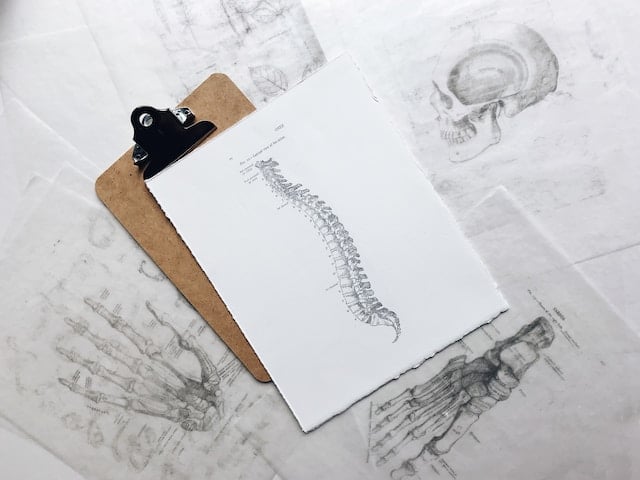
Using Integrative Physical Therapy to Achieve Wellness and Healing
Integrative Physical Therapy (IPT) represents a holistic approach that recognizes the interconnectedness of body systems and addresses root causes of pain, rather than just symptoms.

EMR vs EHR Guide for PT Practices
A clear comparison of EMR and EHR systems for physical therapy practices, covering key differences, benefits, and how PtEverywhere combines the best of both.

Strategies for Growing Your Physical Therapy Practice
Actionable strategies for growing a physical therapy practice through targeted marketing, brand building, exceptional patient care, and leveraging technology for better patient engagement.

Signs of a Bad Physical Therapist: Upgrade Your PT Practice
Recognizing the warning signs of substandard physical therapy care and practical strategies for preventing patient dropouts through better communication, tools, and personalized treatment.

Tools Physical Therapists Use for Effective Treatment and Patient Care
A guide to the top tools physical therapists need for effective treatment and patient care, covering patient-driven mobile apps, automated messaging, and HIPAA-compliant EMR systems.

Virtual Physical Therapy: How PTs Attain Best Results Remotely
A practical guide to delivering virtual physical therapy effectively, covering HIPAA-compliant video consultations, customized home exercise programs, and remote therapeutic monitoring.

The Importance of EMR Systems in Physical Therapy
Why EMR systems are essential for modern physical therapy clinics, covering key features, how they streamline administrative tasks, and how they enhance clinical workflow.

9 Key Lessons They Don't Teach You in Physical Therapy Schooling
PT school covers biomechanics and clinical skills, but practicing therapists need additional knowledge about software, patient communication, networking, and business practices to succeed in the real world.

How to Build a Better Patient Experience with Digital PT Intake Forms
Digital intake forms enhance patient experience in physical therapy clinics by improving data collection efficiency. The article outlines three key strategies: making forms easy to navigate, ensuring multi-device accessibility, and creating customizable solutions.

Dry Needling Physical Therapy: Billing Best Practices
Dry needling can make your PT practice more profitable, but state regulations, insurance coverage, and CPT code selection require careful navigation to stay compliant.

Easy Time Management Tips for Physical Therapists
Practical time management strategies for PT practitioners and clinic owners to reduce burnout, optimize scheduling, and improve patient attendance through smarter goal-setting and digital tools.

3 Strategies To Make Physical Therapy Billing a Snap In 2024
Three practical strategies to simplify PT billing: going paperless, mastering HIPAA billing compliance, and navigating telehealth and Medicare coding for virtual appointments.

Things Physical Therapists Hate
Physical therapists often disapprove of certain exercises and patient statements. This article explores five exercises to avoid and seven statements patients should refrain from making during therapy.

Patient Engagement Strategies For Your PT Practice in 2023
This guide explores evidence-based strategies for keeping physical therapy patients engaged, including SMS messaging, feedback loops, and patient portals to improve outcomes and practice productivity.

Benefits of Running a Hybrid Physical Therapy Clinic
A breakdown of the four PT business models—in-network, out-of-network, cash-based, and hybrid—and why the hybrid approach offers the best combination of revenue, patient access, and flexibility.

Physical Therapy Insurance Billing Made Easy with PtEverywhere
PtEverywhere released a new insurance claim processing solution enabling physical therapy clinic owners to streamline their billing workflow and choose between cash-based, insurance-based, or hybrid billing methods.

Motivate better patient outcomes through PtEverywhere
PtEverywhere's all-in-one platform addresses the challenge of maintaining patient accountability with home exercise programs through compliance reports, user-friendly apps, and timely notifications.

2023 Guide to Remote Therapeutic Monitoring (RTM) Codes
RTM codes introduced in 2022 allow physical therapists to bill for remote patient monitoring and communication — with the potential to generate over $25,000 in annual profit per provider.

Medicare for Physical Therapy: Making Cash-Based Practices In-Network
A comprehensive guide to Medicare rules for cash-based PT practices, covering ABN requirements, opt-out provisions, and the five key challenges clinics face when navigating Medicare coverage.

Why Every Clinic Should Consider a Physical Therapy EMR System
An overview of the key benefits of physical therapy EMR systems, including streamlined documentation, improved billing, better patient portal access, and anywhere accessibility.

How To Improve Clinic Business
Three proven ways to improve your PT clinic's business: providing extra services, making patient care quick and effective, and expanding your online marketing presence.

What to Look for in a Physical Therapy Practice Management Software
A guide to the essential features every physical therapy practice management software should have, from scheduling and EMR to telehealth, patient portals, and messaging.

Physical Therapist Side Hustle Ideas
Explore side hustle opportunities for physical therapists including freelance writing, blogging, and consulting, with pros and cons for each income stream.

15 Key Performance Indicators in Physical Therapy
A comprehensive look at 15 essential KPIs physical therapy clinic owners should track across productivity, revenue, and marketing to assess and grow their practice.

3 Easy Ways to Stay Active This Summer
The article presents three practical strategies for maintaining physical activity during hot summer months: strategic walking at cooler times of day, indoor anaerobic exercises like yoga and pilates, and swimming as a low-impact option.

The 3 Best Health and Wellness Trends 2023 Taught Us
Three health and wellness trends—wearable technology, sleep emphasis, and gut health—that proved their staying power and what they mean for everyday health.

Lessons From Selling Billions of Dollars of Orange Chicken
What Panda Express's 45-year commitment to simplicity can teach PT clinic owners about doubling down on one business, lengthening their timelines, and resisting the urge to chase the next shiny opportunity.

How to Deal with Business Rejection
Two mindset tools for PT clinic owners navigating the inevitable rejections of entrepreneurship: focusing on your long-term vision and controlling only what you can control.

The Best Part of a Cash Practice and It's Not Money
A PT's story of working with unmotivated insurance and work comp patients — and why switching to a cash practice transformed his career by letting him work exclusively with patients who genuinely want to get better.

3 Proven Recurring Revenue Options to Add to Your Business
Three practical recurring revenue models for cash PT practice owners — ongoing in-person sessions, remote coaching, and small group fitness — with real numbers and a framework for hitting your overhead milestone first.

3 Major Predictions For 2022
Three bold predictions for physical therapy and healthcare in 2022: persistent inflation, a boom in cash practices, and growing consumer investment in personal health.

The Important Business Skill That You Already Know
Why physical therapists are already skilled salespeople without knowing it — and how a few small adjustments to how you communicate and value yourself can unlock the cash practice model.

The No Surprises Act: What You Need to Know
Congress signed the No Surprises Act into law to protect patients against surprise medical bills, with good-faith estimate and balance billing requirements becoming effective January 1, 2022.

What to Do If You Can't Find the Job of Your Dreams?
If you can't find the job of your dreams, you might just have to create it — a pivotal insight that can transform your perspective on career possibilities.

Lessons Learned from a Day of Personal Goal Planning
A day of personal goal setting with a small group revealed the power of Vivid Visions, objective goal-setting, and consistent review to drive real progress in business and life.

The Biggest Threat to Cash Practices
Danny Matta argues the real threat to cash PT practices isn't competition from other clinics — it's patient inaction, and fixing it is entirely within the clinic owner's control.

A Special Black Friday Message
Danny Matta shares why cash PT practices should think carefully before discounting their services on Black Friday — and why positioning yourself as the sought-after professional matters more than quick sales.

Insurance Fraud and What to Do About It
A look at how insurance fraud damages the PT profession and why transitioning to a cash-based practice model offers transparency, simplicity, and freedom from the conditions that enable billing abuse.

The Golden Opportunity Amidst the Chaos
The uncertainty of the pandemic is a golden opportunity to build emotional resilience and self-mastery — skills that can't be learned passively, only through deliberate practice.

Achieving Contentment Without Complacency
Taking a chance on yourself and committing to constant improvement is the formula for long-term success — but learning to balance ambition with gratitude is just as important.

The Fast Path to Paying Student Debt Off
The average DPT graduate carries $142,000 in student debt against a median salary of $89,000. Building a successful private practice is the most viable path to financial freedom.

How to Add an Additional $10-$100K from Your Clients
PT Biz founder Danny shares how physical therapy clinic owners can generate significant additional revenue through strategic reactivation campaigns targeting existing and past patients.

How to Really Win in Business and Life
A personal essay on defining what winning means on your own terms rather than comparing yourself to others, and how this mindset shift transforms both your business and personal life.

Tennis Championship Sponsored by PtEverywhere
PtEverywhere sponsored the Triangle Tennis Academy UTR Invitational championship in Raleigh-Durham, demonstrating their commitment to athletic communities and physical well-being through their innovative physical therapy practice management software.

Why Inaction is the Greatest Obstacle You Must Overcome
Fear of the unknown keeps too many clinicians from starting or growing their practice. Inaction is killing your potential — and the market won't wait forever.

PtEverywhere Sponsors Fundraiser for Sgt. Rick Leach
PtEverywhere is sponsoring 'Links for Leach,' a charity golf tournament to raise funds for retired Sergeant Rick Leach's life-saving double lung transplant needed due to pulmonary fibrosis.

Would You Trade Your Health and Relationships for Business Success?
A candid reflection on the real cost of building a successful PT business and why protecting your health and relationships must come before chasing revenue milestones.

5 Tips to Enhance Your PT Clinic's Referrals
Five proven referral strategies for physical therapy clinic owners, from building physician relationships to leveraging patient testimonials and creating a structured referral program.

5 Steps to Increasing Referrals at Your PT Clinic
A straightforward five-step framework for building a consistent referral stream at your physical therapy clinic, from defining your message to measuring outcomes.

Reducing No-Show Rates at Physical Therapy Clinics: 5 Best Practices
Five proven strategies to lower patient no-show rates at PT clinics, including automated reminders, online scheduling, telehealth options, patient portals, and cancellation policies.

Overcoming Online Marketing Burnout
Three questions to help PT clinic owners overcome digital marketing burnout by clarifying their niche, reconnecting with authentic purpose, and evaluating whether to delegate marketing responsibilities.

5 Questions for Outsourcing PT Clinic Management
Five key questions to help PT clinic owners evaluate whether to outsource management tasks, covering time cost, staff outcomes, clinic bottlenecks, work hours, and personal fulfillment.

Is it Cheaper to Manage Your PT Clinic In-House?
An exploration of opportunity cost and comparative advantage in PT clinic management, with a concrete example of why outsourcing administrative tasks often makes more financial sense than doing them in-house.

3 Keys to Subjective Examination in Physical Therapy
Subjective examination is a paramount yet often overlooked element of clinical practice. A skilled clinician should obtain 85-90% of diagnostic information from the subjective history and initial interview.

5 Tips to Build Rapport in Telehealth
Strategies for physical therapists to build meaningful connections with patients during virtual appointments, addressing the unique challenges of telehealth communication.

Physical Therapy Intake Forms for Patients: 10 Essential Elements
Online PT intake forms have simplified patient information management. This guide outlines 10 crucial elements to include, from identifying information to HIPAA acknowledgements.

The Benefits of Digital Record Keeping for Physical Therapists
Ten reasons why physical therapy practices should switch from paper to digital EMR systems, covering time savings, organization, compliance, cost reduction, and marketing capabilities.

10 Physical Therapy Marketing Ideas to Grow Your Clinic's Brand
Ten actionable physical therapy marketing ideas to attract new patients and grow your clinic's brand, from building an online presence and gathering reviews to networking and measuring ROI.

10 Physical Therapist Networking Tips for PT Professionals
Relationships form the foundation of success for individuals and businesses. Strong local connections can generate referrals and foster authentic business growth.

5 Reasons Your PT Practice Isn't Generating Revenue
Five common reasons physical therapy practices plateau or underperform on revenue, from poor time management and task overload to weak systems and lack of outcomes tracking.

The Relationship Between Wellness and PT
Wellness and physical therapy are interconnected, with wellness serving as the motivator for patients to seek PT care. Understanding patient perspectives on health enables therapists to guide behavioral change effectively.

10 Wellness Industry Trends for 2021
Ten wellness trends shaping 2021—from virtual wellness and outdoor exercise to mental health, community, and the rise of telehealth in physical therapy.

4 Pillars of Patient Satisfaction
Patient satisfaction drives organic practice growth and referrals. This article breaks down patient satisfaction into four core pillars: Environment, Expectations, Care, and Value.

2021 Guide to Patient Engagement
A practical guide to patient engagement for physical therapists covering what it means, why it matters for outcomes and business growth, and three ways to increase it through listening, modeling, and personalized HEP.

How to Cure Impostor Syndrome
Impostor syndrome is a significant psychological barrier for healthcare professionals pursuing independent ventures. A three-step approach can help you overcome self-doubt and build a purposeful practice.

9 Steps to Expectation Setting with Your PT Patients
Customer dissatisfaction typically stems from unmet promises rather than poor service delivery. This guide provides nine strategies for managing patient expectations in physical therapy practices.

Attitude of Gratitude
Despite 2020's challenges — loneliness, financial hardship, and anxiety — there is still much to be grateful for. Adversity fosters resilience, and simple pleasures deserve renewed appreciation.

Overworked and Underpaid
Burnout is real for many physical therapists and fitness professionals. Here are five actionable tips to break the cycle and reclaim your career.

Courage to Take the First Steps
The story of Danny Matta's leap from Army PT to cash-practice owner — a reminder that taking the first steps toward career freedom is the hardest part, but you don't have to do it alone.

How to Craft a Home Exercise Program (HEP) for Your Patients
Home Exercise Programs empower patients to take ownership of their health goals. This guide explores how PTs can create personalized, effective HEPs that enhance recovery and patient outcomes.

Strength in Numbers: KPIs for PT
An introduction to key performance indicators for physical therapy practices, covering five essential KPIs including net revenue, profit per visit, revenue per therapist, referrals, and marketing metrics.

Back to the Basics: Starting a Cash Practice
An honest look at why cash-based physical therapy works, from the frustrations of insurance-based practice to the opportunity of building a profitable, patient-centered cash practice from scratch.

Digital Transformation in Physical Therapy
How physical therapists can leverage digital transformation to mitigate uncertainty, expand remote care, and grow their practice through mobile EMR, patient portals, HEP, and telehealth.

5 Best Practices in Physical Therapy Clinic Management
Five patient experience best practices for PT clinics navigating post-pandemic operations, from safety communication and going touchless to accessibility, in-person optimization, and follow-up.

Why Time is More Valuable Than Money
Money can be earned back, but time with the people you love cannot. One simple question — does saying yes allow me to spend more meaningful time with family? — can transform how you run your practice and your life.

Perspective over Circumstance
A reflection on how technology—especially telehealth—is bringing people together and opening new doors for physical therapy practices during challenging times.

Now We're Stressed Out
An honest look at how pandemic-era stress is affecting physical therapists and their patients, and how the right practice management tools can help PTs reduce burnout while meeting rising demand.

Dealing the Magic Drug
Exercise serves as a natural immune system booster through increased blood flow, lymphatic drainage, and stress reduction. Physical therapists play a vital role in guiding patients toward sustainable health improvements.

Knock, Knock... The Clinic is Here
How concierge and mobile physical therapy practices can leverage all-in-one PT software to stay organized, professional, and impactful while delivering care directly to patients.

Online Physical Therapy 101: 5 Tips to Improve Patient Experience
As physical therapy practices adapted to remote care during COVID-19, this guide offers five essential strategies for successfully implementing telehealth services, from optimizing your setup to choosing appropriate software.

PtEverywhere Participates in PT Virtual Summit
PtEverywhere's leadership shared insights at Breakthrough PT Marketing's Virtual Summit alongside Dr. Becky Allen, who discussed how the all-in-one platform transformed her women's health practice and enabled seamless telehealth integration.

Telehealth in Physical Therapy Today
The COVID-19 pandemic prompted physical therapists to move practices online, creating opportunities to implement telehealth capabilities. PtEverywhere offers a secure, HIPAA-compliant platform enabling remote patient care through evaluations, education, and home exercise programming.

PtEverywhere Rated Top EMR in Customer Satisfaction and Technology
PtEverywhere received top marks from customers in UpDoc Inc.'s 2020 EMR Wish List Survey, with users rating it as the best EMR software available today across multiple categories including overall recommendation, pricing, and capabilities in documentation and billing.

Telehealth & COVID-19
As coronavirus spreads globally, telehealth emerges as a vital alternative enabling physical therapists to safely provide virtual care to at-risk patients without in-person exposure.

You Can't Spell LOVE Without PT
Physical therapists can strengthen patient relationships by reducing administrative burden through practice management software, allowing them to focus on their core mission of patient care.

Auto Messages Save Time, Money & Improve Patient Care
Automated messaging features can reduce missed appointments by up to 40% and help physical therapy clinics save money while improving patient care outcomes.

New Decade, New Possibilities
PtEverywhere's 2020 launch announcement welcoming a new wave of patient-centered physical therapists with an all-in-one practice management platform designed for cash-based PT practices.

The Pros and Cons of Traveling Physical Therapy
A practical overview of the advantages and disadvantages of traveling physical therapy, from financial incentives and serving underserved communities to the personal strains of constant mobility.

Improve Patient Care with Telehealth
Telehealth utilizes technology to enable remote patient and clinician contact, and represents a growing market expected to expand significantly, offering physical therapy clinics new opportunities to enhance patient outcomes.

Patient Care Plans with Packages and Memberships
PtEverywhere enables physical therapy clinics to offer packages and memberships to cash-based patients, helping them understand treatment value and commit financially to their care plans.

Honoring Dr. Martin Luther King, Jr.
On Martin Luther King, Jr. Day, we reflect on Dr. King's call to action — and his warning that the silence of friends can be just as damaging as the words of enemies.

PtEverywhere Gives Back to the Community
PtEverywhere announced a sponsorship of Winston-Salem State University's charity golf tournament, supporting both the WSSU Professional Development Fund and the MSFit Foundation.

Ver 2.0 Released with UI Improvements and New Features
PtEverywhere announced the release of Version 2.0, delivering enhanced mobile functionality that allows physical therapists and patients to communicate, schedule appointments, and manage documentation from any device.

RETAIN Patients with PtEverywhere
Physical therapists earn patient retention and referrals through clinical competence and personalized treatment plans that empower patients to actively participate in their recovery journey.

MOTIVATE Patients with PtEverywhere
With proper communication, inspiring clients to achieve their goals can be possible. PtEverywhere helps physical therapy clinics improve patient engagement through home exercise programs, compliance tracking, and personalized video content.

CONNECT Patients with PtEverywhere
PtEverywhere enables providers to gain comprehensive insights into patient daily activities and health metrics before appointments, improving treatment planning and patient outcomes.

ATTRACT Patients with PtEverywhere
PtEverywhere helps physical therapists engage audiences through innovative content sharing, enabling them to upload treatment videos, capture contact information, and nurture relationships with potential new patients.

The Most Important Thing
A reflection on the value of time in physical therapy — why PTs should stop undervaluing their hours on administrative work and invest in tools that free them to focus on what only they can do.

5 Links in a Cash PT's Pain Chain
A veteran cash-based PT's candid account of the five challenges — from insurance frustration to patient no-shows — that shaped how he built a thriving out-of-network practice.

What PtEverywhere Can Do for Your Physical Therapy Clinic
PtEverywhere is a comprehensive, integrated software solution designed to help physical therapy and personal training practices streamline operations while improving client engagement through notifications, exercise libraries, and administrative tools.
No posts in this category yet.